
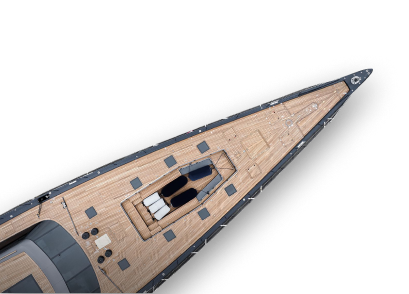
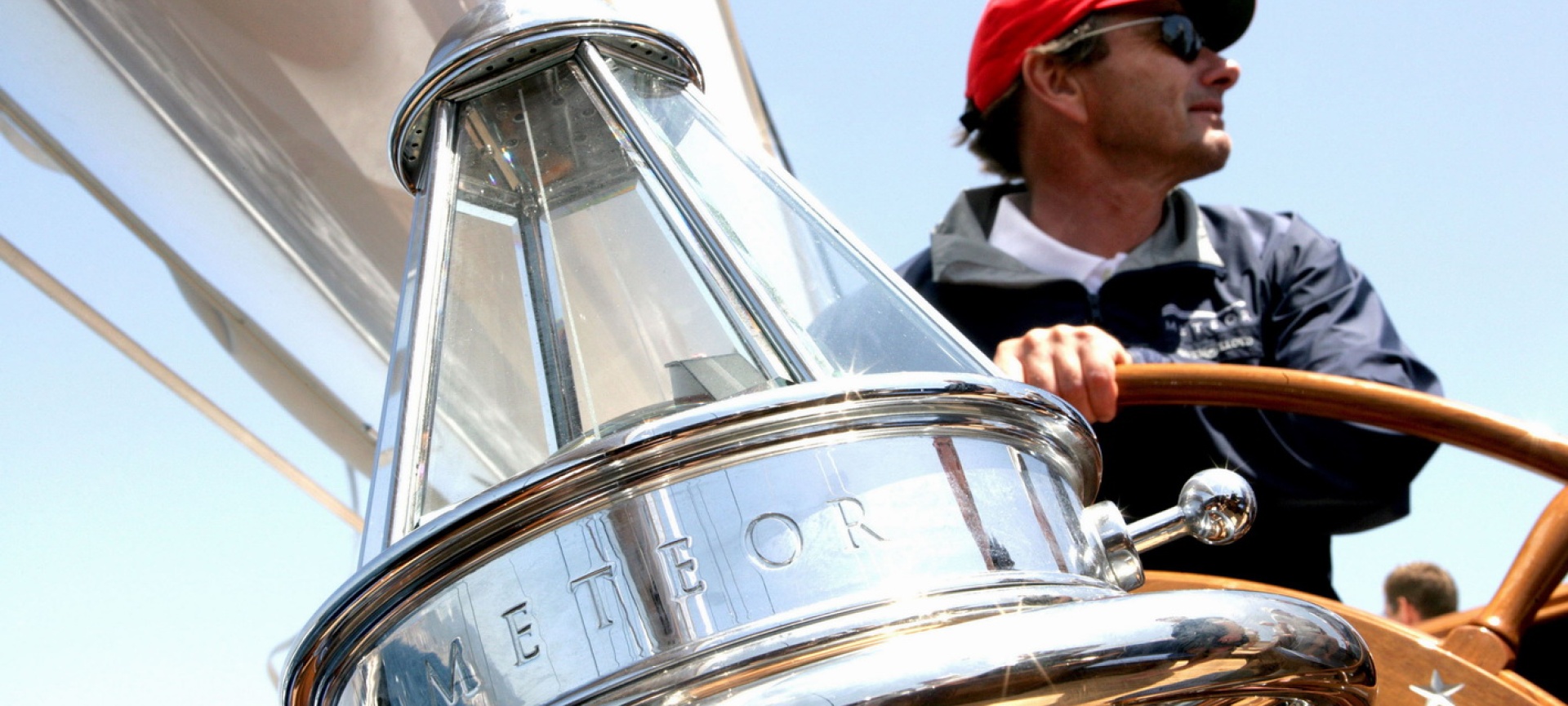
Meteor owner interview
John Risley, owner of the motoryacht Northern Star and co-owner with close friend Dan Meyers of the schooner Meteor talks to inhuis about his love of boats and the sea.
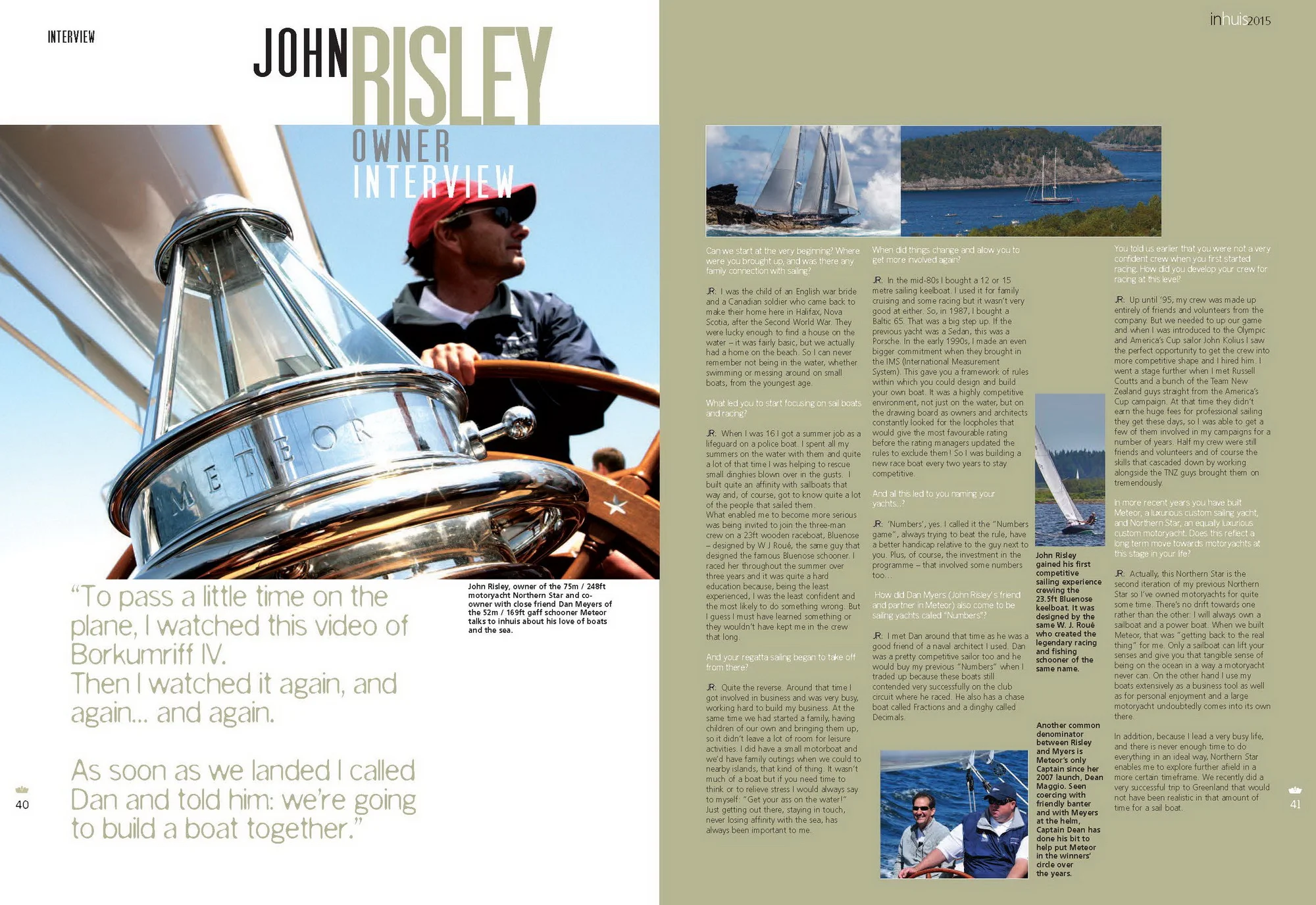
John Risley gained his first competitive sailing experience crewing the 23ft Bluenose keelboat. It was designed by the same W. J. Roué who created the legendary racing and fishing schooner of the same name.
Another common denominator between Risley and Myers is Meteor’s only captain since her 2007 launch, Dean Maggio. Seen coercing with friendly banter and with Meyers at the helm, captain Dean has done his bit to help put Meteor in the winners’ circle over the years.
Can we start at the very beginning? Where were you brought up, and was there any family connection with sailing?
JR: I was the child of an English war bride and a Canadian soldier who came back to make their home here in Halifax, Nova Scotia, after the Second World War. They were lucky enough to find a house on the water – it was fairly basic, but we actually had a home on the beach. So I can never remember not being in the water, whether swimming or messing around on small boats, from the youngest age.
What led you to start focusing on sail boats and racing?
JR: When I was 16 I got a summer job as a lifeguard on a police boat. I spent all my summers on the water with them and quite a lot of that time I was helping to rescue small dinghies blown over in the gusts. I built quite an affinity with sailboats that way and, of course, got to know quite a lot of the people that sailed them.
What enabled me to become more serious was being invited to join the three-man crew on a 23ft wooden raceboat, Bluenose – designed by W J Roué, the same guy that designed the famous Bluenose schooner. I raced her throughout the summer over three years and it was quite a hard education because, being the least experienced, I was the least confident and the most likely to do something wrong. But I guess I must have learned something or they wouldn’t have kept me in the crew that long.
And your regatta sailing began to take off from there?
JR: Quite the reverse. Around that time I got involved in business and was very busy, working hard to build my business. At the same time we had started a family, having children of our own and bringing them up, so it didn’t leave a lot of room for leisure activities. I did have a small motorboat and we’d have family outings when we could to nearby islands, that kind of thing. It wasn’t much of a boat but if you need time to think or to relieve stress I would always say to myself: “Get your ass on the water!” Just getting out there, staying in touch, never losing affinity with the sea, has always been important to me.
When did things change and allow you to get more involved again?
JR: In the mid-80s I bought a 12 or 15 metre sailing keelboat. I used it for family cruising and some racing but it wasn’t very good at either. So, in 1987, I bought a Baltic 65. That was a big step up. If the previous yacht was a Sedan, this was a Porsche. In the early 1990s, I made an even bigger commitment when they brought in the IMS (International Measurement System). This gave you a framework of rules within which you could design and build your own boat. It was a highly competitive environment, not just on the water, but on the drawing board as owners and architects constantly looked for the loopholes that would give the most favourable rating before the rating managers updated the rules to exclude them! So I was building a new race boat every two years to stay competitive.
“To pass a little time on the plane, I watched this video of Borkumriff IV. Then I watched it again, and again… and again. As soon as we landed I called Dan and told him: we’re going to build a boat together.”
And all this led to you naming your yachts…?
JR: ‘Numbers’, yes. I called it the “Numbers game”, always trying to beat the rule, have a better handicap relative to the guy next to you. Plus, of course, the investment in the programme – that involved some numbers too…
How did Dan Myers (John Risley’s friend and partner in Meteor) also come to be sailing yachts called “Numbers”?
JR: I met Dan around that time as he was a good friend of a naval architect I used. Dan was a pretty competitive sailor too and he would buy my previous “Numbers” when I traded up because these boats still contended very successfully on the club circuit where he raced. He also has a chase boat called Fractions and a dinghy called Decimals.
You told us earlier that you were not a very confident crew when you first started racing. How did you develop your crew for racing at this level?
JR: Up until ’95, my crew was made up entirely of friends and volunteers from the company. But we needed to up our game and when I was introduced to the Olympic and America’s Cup sailor John Kolius I saw the perfect opportunity to get the crew into more competitive shape and I hired him. I went a stage further when I met Russell Coutts and a bunch of the Team New Zealand guys straight from the America’s Cup campaign. At that time they didn’t earn the huge fees for professional sailing they get these days, so I was able to get a few of them involved in my campaigns for a number of years. Half my crew were still friends and volunteers and of course the skills that cascaded down by working alongside the TNZ guys brought them on tremendously.
In more recent years you have built Meteor, a luxurious custom sailing yacht, and Northern Star, an equally luxurious custom motoryacht. Does this reflect a long term move towards motoryachts at this stage in your life?
JR: Actually, this Northern Star is the second iteration of my previous Northern Star so I’ve owned motoryachts for quite some time. There’s no drift towards one rather than the other: I will always own a sailboat and a power boat. When we built Meteor, that was “getting back to the real thing” for me. Only a sailboat can lift your senses and give you that tangible sense of being on the ocean in a way a motoryacht never can. On the other hand I use my boats extensively as a business tool as well as for personal enjoyment and a large motoryacht undoubtedly comes into its own there.
In addition, because I lead a very busy life, and there is never enough time to do everything in an ideal way, Northern Star enables me to explore further afield in a more certain timeframe. We recently did a very successful trip to Greenland that would not have been realistic in that amount of time for a sail boat.
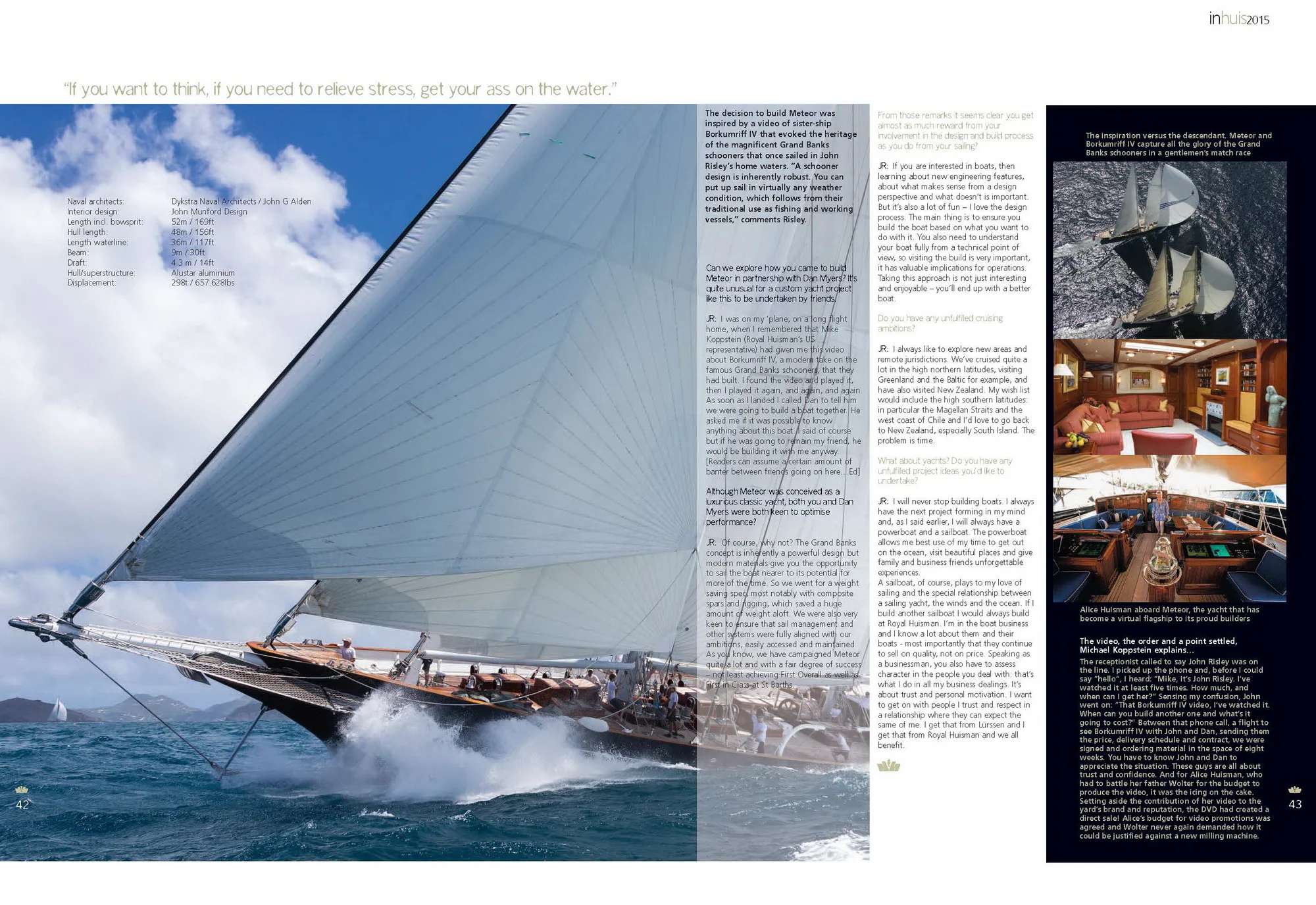
“If you want to think, if you need to relieve stress, get your ass on the water.”
Can we explore how you came to build Meteor in partnership with Dan Myers? It’s quite unusual for a custom yacht project like this to be undertaken by friends.
JR: I was on my ‘plane, on a long flight home, when I remembered that Mike Koppstein (Royal Huisman’s US representative) had given me this video about Borkumriff IV, a modern take on the famous Grand Banks schooners, that they had built. I found the video and played it, then I played it again, and again, and again. As soon as I landed I called Dan to tell him we were going to build a boat together. He asked me if it was possible to know anything about this boat. I said of course but if he was going to remain my friend, he would be building it with me anyway. [Ed: readers can assume a certain amount of banter between friends going on here…]
Although Meteor was conceived as a luxurious classic yacht, both you and Dan Myers were both keen to optimise performance?
JR: Of course, why not? The Grand Banks concept is inherently a powerful design but modern materials give you the opportunity to sail the boat nearer to its potential for more of the time. So we went for a weight saving spec, most notably with composite spars and rigging, which saved a huge amount of weight aloft. We were also very keen to ensure that sail management and other systems were fully aligned with our ambitions, easily accessed and maintained. As you know, we have campaigned Meteor quite a lot and with a fair degree of success – not least achieving First Overall as well as First in Class at St Barths.
From those remarks it seems clear you get almost as much reward from your involvement in the design and build process as you do from your sailing?
JR: If you are interested in boats, then learning about new engineering features, about what makes sense from a design perspective and what doesn’t is important. But it’s also a lot of fun – I love the design process. The main thing is to ensure you build the boat based on what you want to do with it. You also need to understand your boat fully from a technical point of view, so visiting the build is very important, it has valuable implications for operations. Taking this approach is not just interesting and enjoyable – you’ll end up with a better boat.
Do you have any unfulfilled cruising ambitions?
JR: I always like to explore new areas and remote jurisdictions. We’ve cruised quite a lot in the high northern latitudes, visiting Greenland and the Baltic for example, and have also visited New Zealand. My wish list would include the high southern latitudes: in particular the Magellan Straits and the west coast of Chile and I’d love to go back to New Zealand, especially South Island. The problem is time.
What about yachts? Do you have any unfulfilled project ideas you’d like to undertake?
JR: I will never stop building boats. I always have the next project forming in my mind and, as I said earlier, I will always have a powerboat and a sailboat. The powerboat allows me best use of my time to get out on the ocean, visit beautiful places and give family and business friends unforgettable experiences.
A sailboat, of course, plays to my love of sailing and the special relationship between a sailing yacht, the winds and the ocean. If I build another sailboat I would always build at Royal Huisman. I’m in the boat business and I know a lot about them and their boats - most importantly that they continue to sell on quality, not on price. Speaking as a businessman, you also have to assess character in the people you deal with: that’s what I do in all my business dealings. It’s about trust and personal motivation. I want to get on with people I trust and respect in a relationship where they can expect the same of me. I get that from Lürssen and I get that from Royal Huisman and we all benefit.
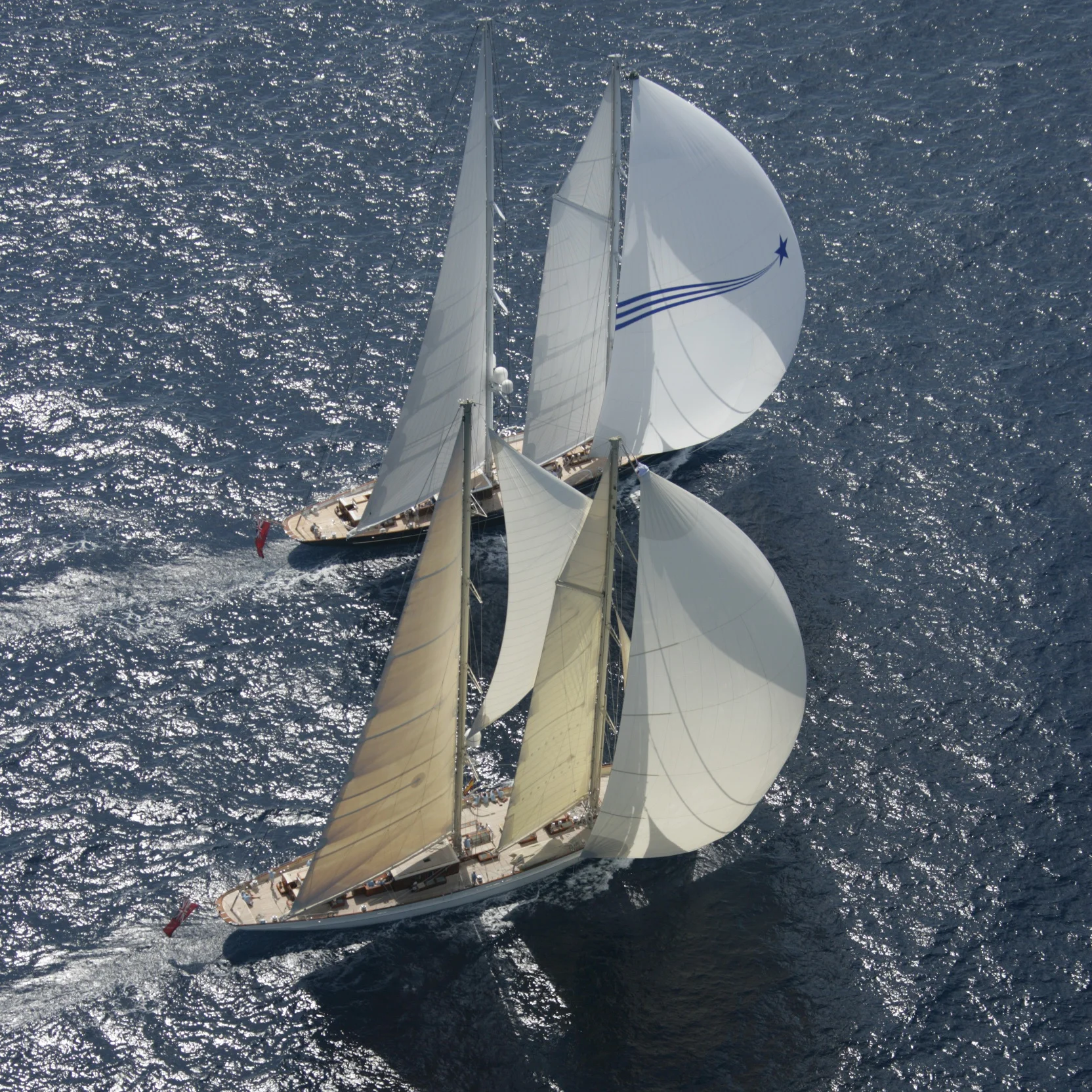
The inspiration versus the descendant. Meteor and Borkumriff IV capture all the glory of the Grand Banks schooners in a gentlemen’s match race
The video, the order and a point settled, Michael Koppstein explains…
The receptionist called to say John Risley was on the line. I picked up the phone and, before I could say “hello”, I heard: “Mike, it’s John Risley. I’ve watched it at least five times. How much, and when can I get her?” Sensing my confusion, John went on:
“That Borkumriff IV video, I’ve watched it." When can you build another one and what’s it going to cost?”
Between that phone call, a flight to see Borkumriff IV with John and Dan, sending them the price, delivery schedule and contract, we were signed and ordering material in the space of eight weeks. You have to know John and Dan to appreciate the situation. These guys are all about trust and confidence.
And for Alice Huisman, who had to battle her father Wolter for the budget to produce the video, it was the icing on the cake. Setting aside the contribution of her video to the yard’s brand and reputation, the DVD had created a direct sale! Alice’s budget for video promotions was agreed and Wolter never again demanded how it could be justified against a new milling machine.
Link to Borkumriff IV video: opens new tab.
“Owner interview John Risley” was first published in a previous edition of “inhuis”


