
Flyer: 50 Years
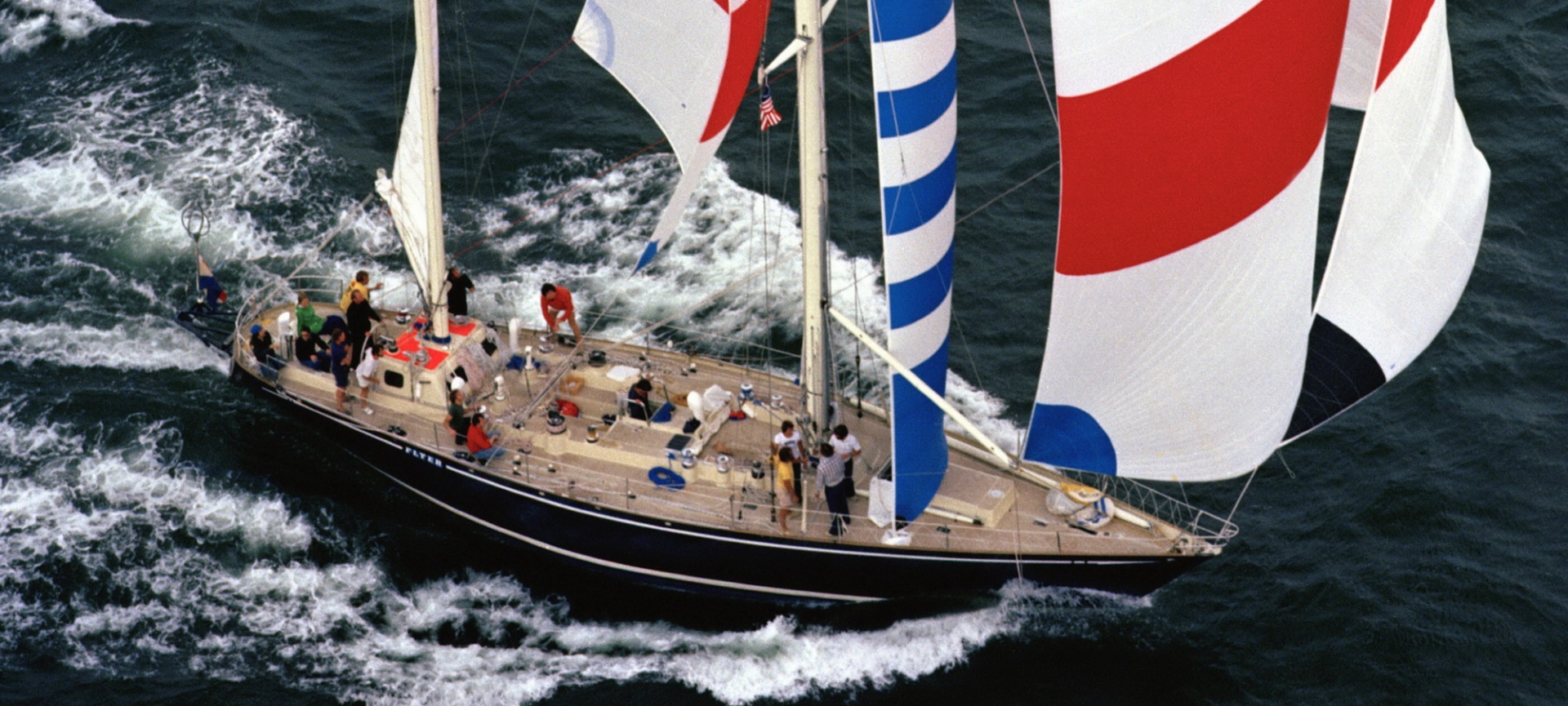
2026 marks the 50th anniversary of Conny van Rietschoten placing an order with Royal Huisman then named ”Overijsselse Jachtwerf W. Huisman B.V.” to build his first Whitbread yacht, Flyer. The two racing yachts he commissioned, both named Flyer and built in Vollenhove, became a benchmark for quality and reliability in the harsh ocean conditions. Under Van Rietschoten’s leadership, Flyer was twice the winner of the Whitbread Round the World Race (now known as The Ocean Race): a feat that has not been matched since. These back-to-back victories not only made offshore racing history, they also helped establish Royal Huisman’s international reputation.
The spark was lit when newspaper reports of the first 1973 - 1974 Whitbread Round the World Race reached Dutch sailor and businessman Conny van Rietschoten. The scale and toughness of the event grabbed him immediately. Behind the decision was a life shaped by both privilege and hardship, sailing central in youth, then war and deprivation, followed by a return to the sea and, eventually, the freedom to choose his next great challenge. Conny’s approach was characteristically precise. After wide consultations, he commissioned Sparkman & Stephens to design an optimized 20m / 65ft yacht and placed the order with the Huisman shipyard on one condition: the yacht had to be “ready to sail away” on the first Saturday in April 1977.
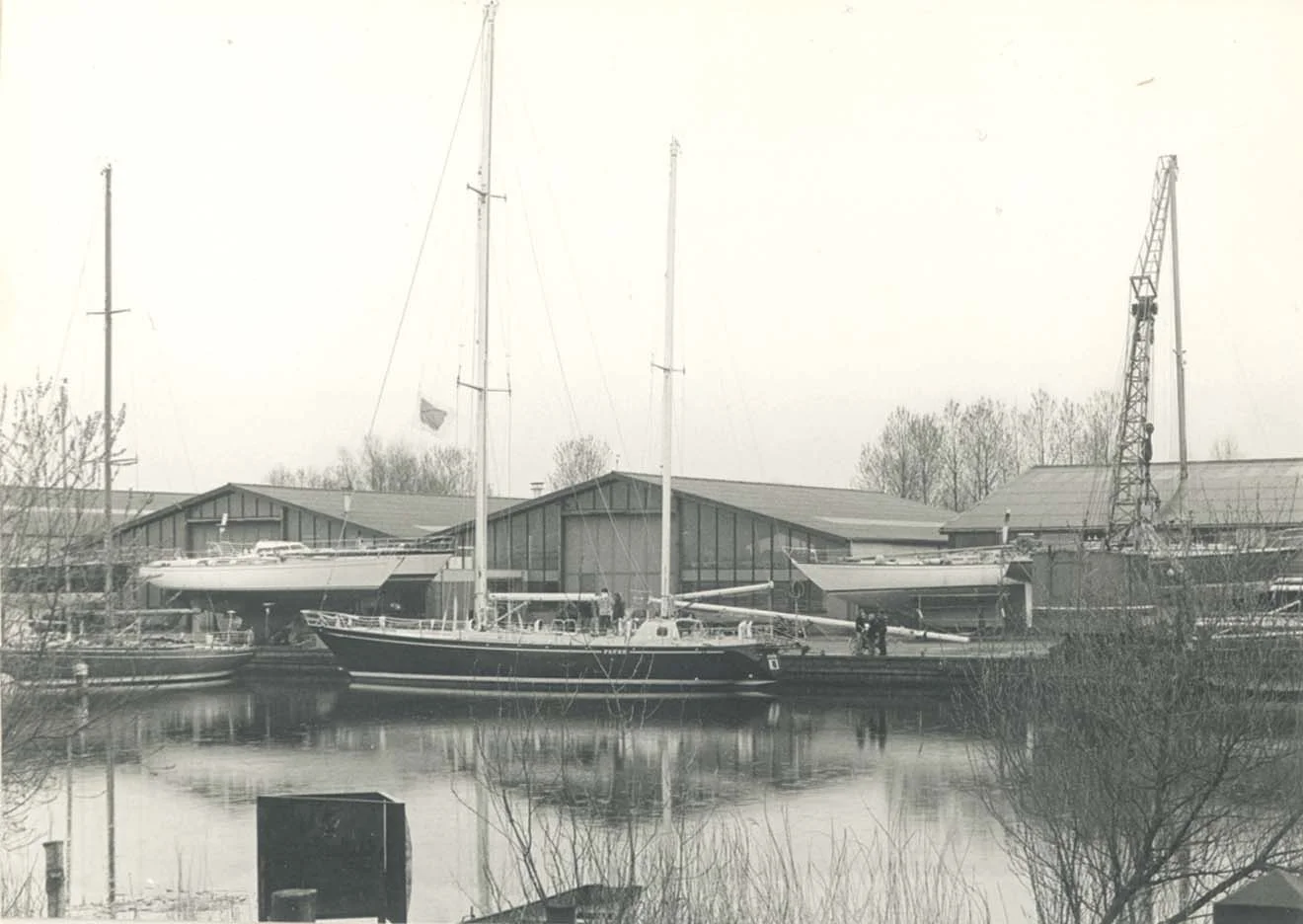
Flyer (I) at the new shipyard facility of Royal Huisman then named ”Overijsselse Jachtwerf W. Huisman B.V.”
Wolter Huisman and his shipyard team delivered a few days ahead of schedule and Conny later put the build quality into words that still read like a yard motto: “…all the credit for this should go to Wolter, who did an excellent job. She was extremely well built and never presented worrying symptoms of structural weakness…” But Flyer wasn’t just built well: she was prepared like no other. Between launch and the race start, Flyer sailed 10,000 miles in a carefully planned program that even included a U.S. cruise and the Transatlantic Race, with the shipyard team ready to implement improvements from the shakedown. On the Whitbread start line, she was “by far the most thoroughly prepared” yacht.
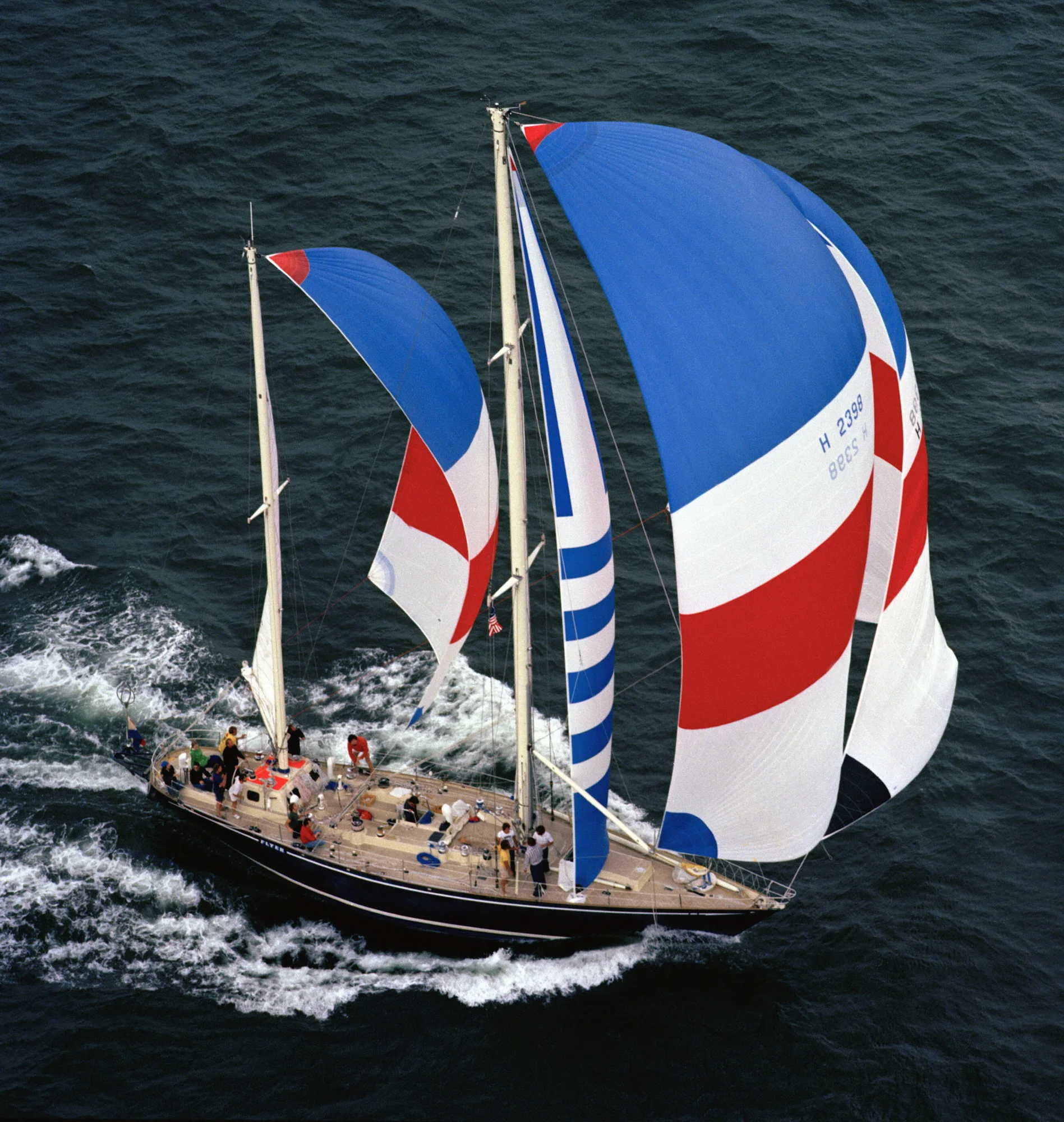
Photo by PPL Ltd
That preparation paid off in a finish that became part of offshore folklore. In the Southern Ocean and beyond, the watch leaders collected stories the hard way: a massive broach after a steering cable snapped, and a terrifying Chinese gybe in the Straits of Le Maire after rounding Cape Horn. In one dramatic moment, navigator Gerry Dykstra - the founder of the nowadays internationally reclaimed Dykstra Naval Architects team - recalled “having to climb up a wet deck like a vertical rock face to release the sheets.” And when the end finally came: winds gusting to hurricane force. Flyer thundered through the Needles Channel, blew a heavy spinnaker, and fought her way toward the line in a finale described simply as: “Quite a finish!” On 25 March 1978, Flyer crossed the finish to take the overall prize witnessed by a jubilant Wolter Huisman.
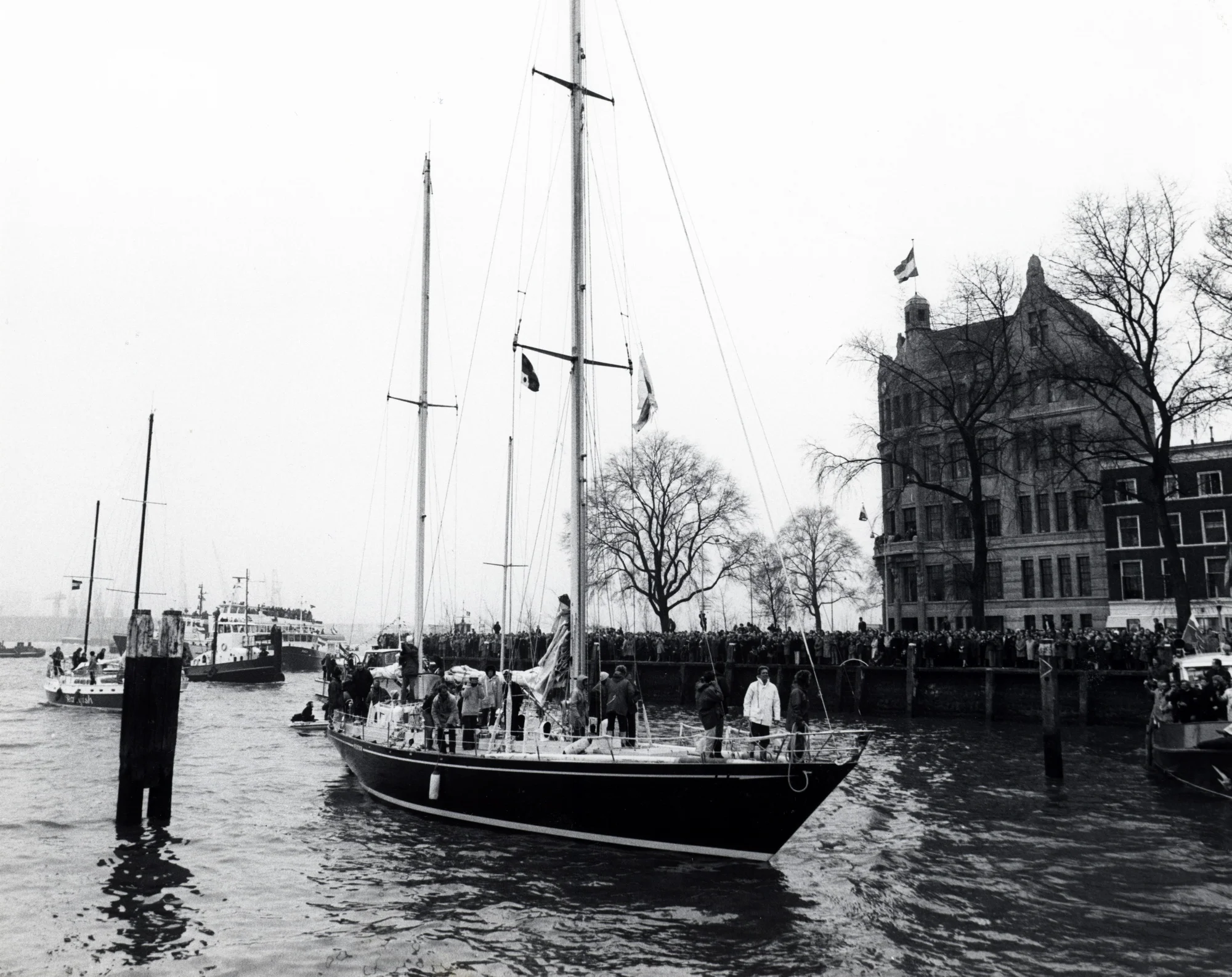
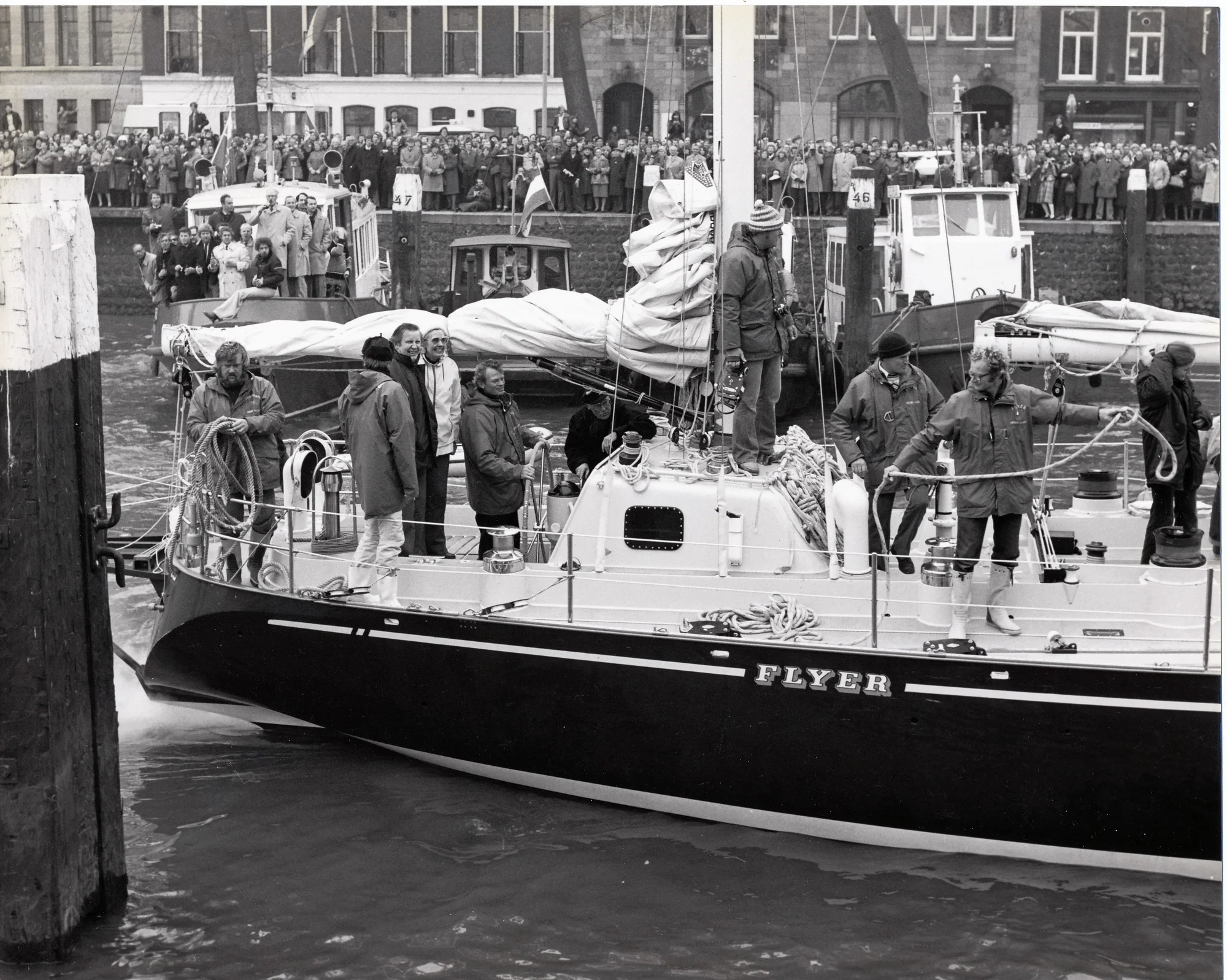
The proud builder of Flyer, Wolter Huisman (standing in the cockpit behind Conny van Rietschoten), at the yacht's return in Rotterdam, The Netherlands.
The double crown: the new Flyer
Four years later, Royal Huisman would do it again: this time even more emphatically. The back-to-back Whitbread victories by Flyer and the new Flyer have become the shipyard’s “double crown.” The road to the 23m / 76ft new Flyer, designed by Germán Frers, ran through the maxi Helisara, whose lightweight techniques and overall concept became an inspiration for the next campaign. When the new Flyer project gathered momentum, a high-level team was assembled at Vollenhove, with Aedgard Koekebakker appointed project manager, while Wolter Huisman was also strengthening the wider technical capabilities around the shipyard.
As the aluminum mast business expanded, the shipyard's sister company Marquip, later Rondal, developed to supply winches and deck equipment too, driven by the same desire for greater control over quality, delivery and innovation. This period also saw early Rondal breakthroughs including pawl-free and sealed oil-bath winches, while both Flyers belonged to the era in which new rig-related solutions were being pioneered. For example, the first hydraulic mast jack system, fitted on the new Flyer, was one of the earliest outcomes of this inventive drive. It made rigging work faster, safer, and easier.
On 8 August 1981, Flyer started the Whitbread from Southampton. After 119 days, one hour and 12 minutes, she finished having achieved an extraordinary triple: winning elapsed time on every leg, winning overall on handicap, and breaking the course record by two weeks.
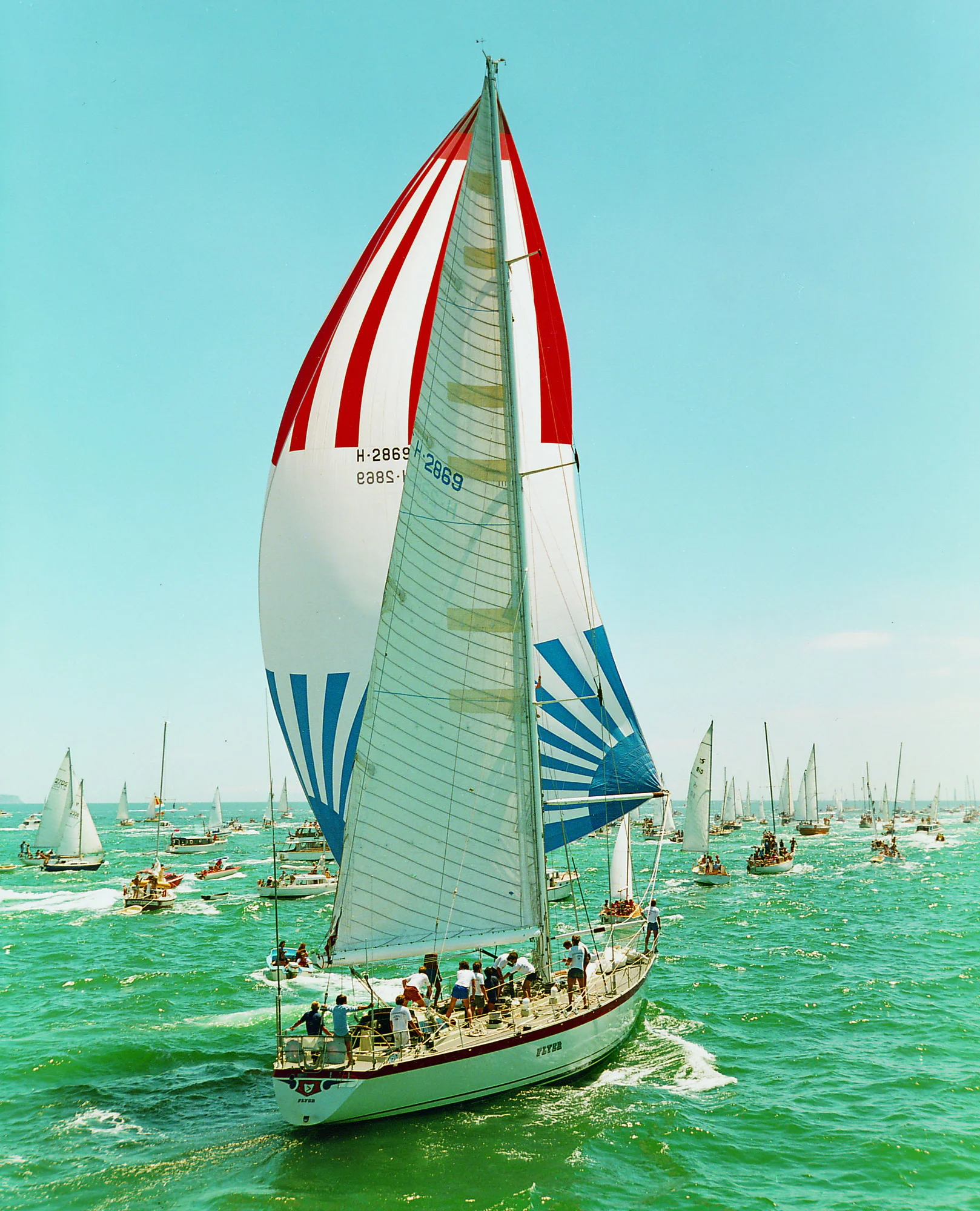
The new Flyer (II) - photo by PPL Ltd
Five decades on from the start of the first Flyer build, the legacy is clear: two yachts, two Whitbread wins and a shipyard identity forged in the discipline of preparation, the courage of Wolter Huisman and the team to innovate, and the satisfaction of seeing a yacht finish what she was built to do.
“With his Flyers, both built by Royal Huisman, Conny van Rietschoten won two editions of the Whitbread Round The World Yacht Race now known as The Ocean Race: a feat that has not been matched since.”
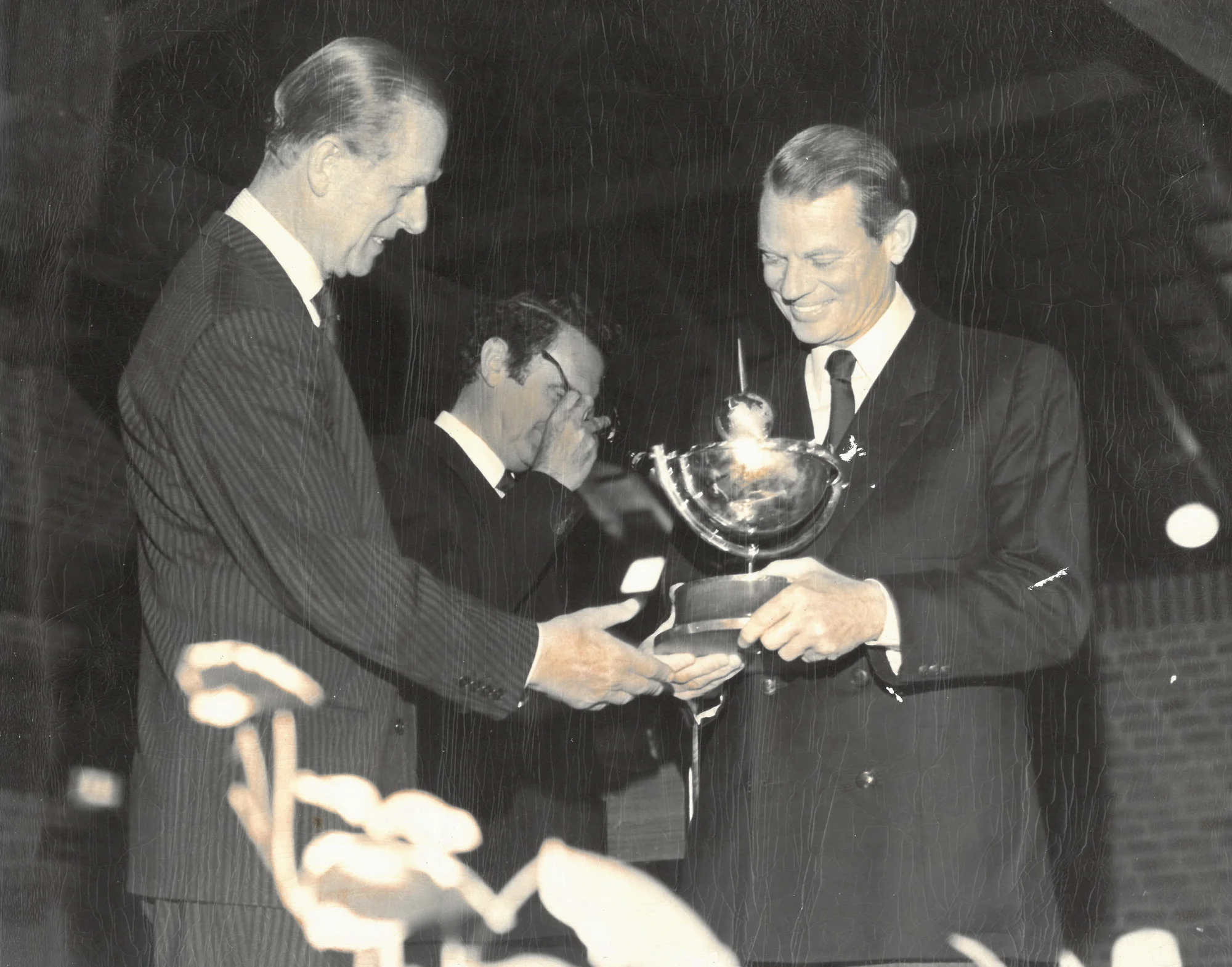
The Duke of Edinburgh, Prince Philip, gives Conny van Rietschoten the prestigious award for winning the 1981-1982 edition of the Whitbread Round the World Yacht Race.
"Five decades on from the start of the first Flyer build, the legacy is clear: two yachts, two Whitbread wins and a shipyard identity forged in the discipline of preparation, the courage to innovate, and the satisfaction of seeing a yacht finish what she was built to do."
Discover the shipyard's heritage – since 1884: link
Over the years, the shipyard team developed many smart solutions, several of which became trendsetters in the sector. Today, recent groundbreaking work by the shipyard, is in the process of re-shaping industry practices. The team recognizes the importance of advancing the technology behind these strongpoints. Discover the following five innovation themes: sustainability, featherlight, user experience, sailing systems and tools & methods.


